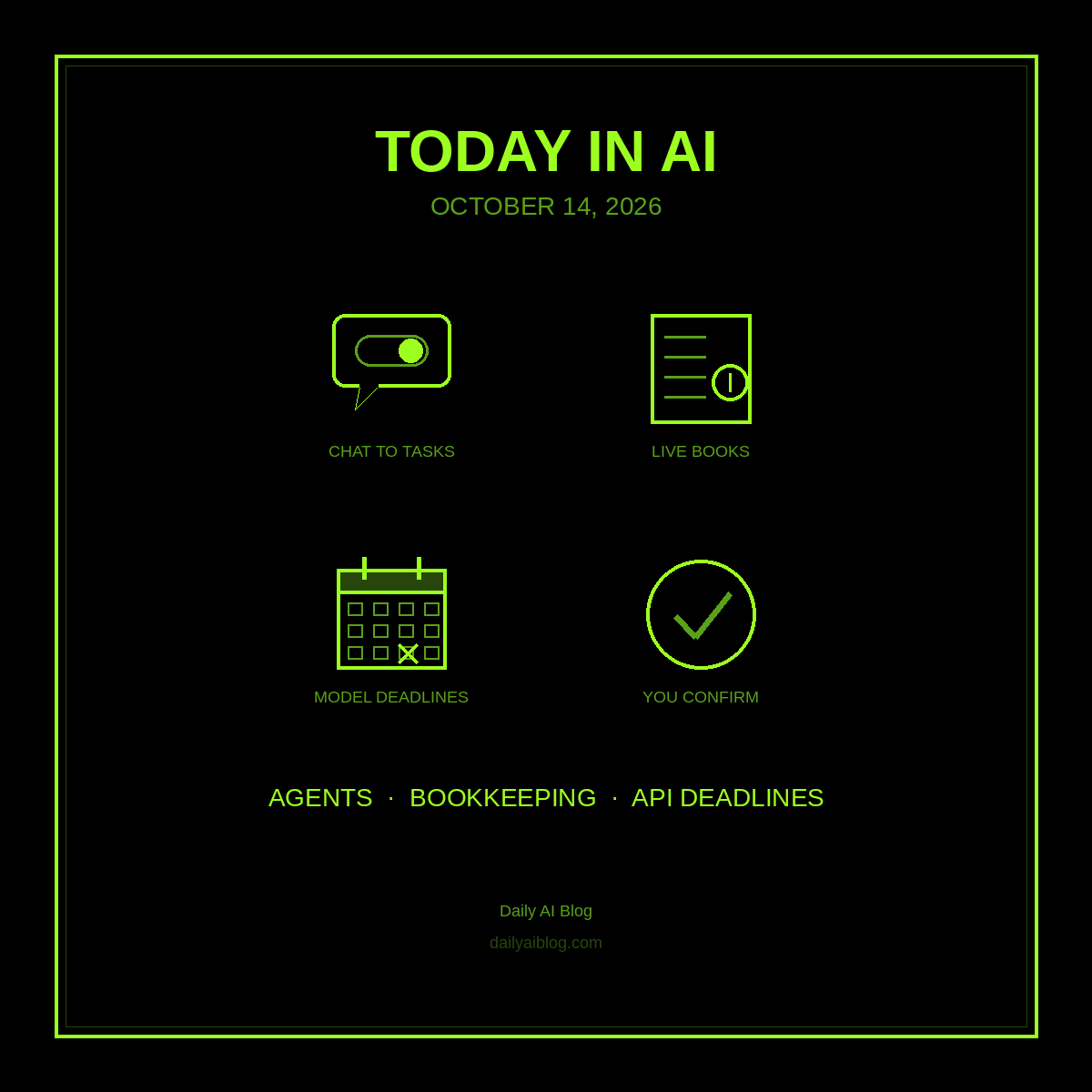
Wednesday’s AI news is less about flashy demos and more about where AI actually lives in your week. Google put its new top model, Gemini 4 Argon, inside the Gemini app and added a switch that lets it run tasks while you’re away. Xero, the small business accounting platform, plugged its live books straight into Gemini chats. And OpenAI quietly set a shutdown date for some of the most widely used models in its API, which matters if any tool you pay for was built on them. Here’s what changed and what to do about it.
1. Gemini 4 Argon lands in the Gemini app, and it can now work while you’re away
Google released Gemini 4 Argon on October 13, calling it its frontier model for deep, multi-step work in coding, finance, legal, cybersecurity, and science. Developers can use it through the Gemini API, and everyday users get it in the Gemini app and AI Mode in Search if they’re on a Google AI Pro or Ultra plan.
The part that matters most for regular people is in the Gemini app announcement. There’s now a simple toggle in the main chat window that switches from chat to tasks. Google says that when you pick tasks, Gemini can keep working for you even when you’re not at your computer, across your Google apps and more. Gemini also now connects to more than 40 apps, and Google names Instacart, OpenTable, Adobe, and Shopify as examples, for things like ordering groceries, booking tables, and building a business.
Google also says Argon answers more directly, with less hedging, less repetition, and fewer clichés, and that it shares its progress more often on longer jobs. For developers, the introductory API price is $2 per million input tokens and $10 per million output tokens through November 30, 2026, then $4 and $20 after that.
Why it matters: “chat” and “agent” are merging into one box. If you already pay for Google AI Pro, try handing it one boring, repeatable job this week, like a weekly grocery list or a reservation search, and see how much of it actually gets done without you babysitting.
Sources: Google: Gemini 4 Argon (Oct. 13, 2026); Google: Gemini 4 Argon in the Gemini app; Google Cloud Blog.
2. Xero puts your live books inside Gemini
Xero announced today a connected app for Google Gemini, and it says it’s the first financial management platform to launch one. Small businesses, accountants, and bookkeepers can pull real-time Xero data into a Gemini conversation and ask questions in plain English.
According to Xero, you can generate Profit & Loss statements, check your cash position, spot overdue balances, flag overdue bills, see your top-revenue clients, and get charts like net profit or aged receivables right in the chat. Accountants can also switch between client organizations while they work.
Two details stand out. First, anything that changes your financial data, like issuing an invoice or sending a payment reminder, needs your explicit confirmation before it runs. Second, Xero says the financial data is used only for your session and isn’t used to train Gemini models. Xero also says that “coming soon,” customers on eligible plans can use Gemini’s new tasks toggle for things like a daily summary of pending bills and cash, or a workflow that pairs Xero with Gmail to prepare follow-ups on overdue invoices.
Why it matters: this is the kind of AI that saves a small business owner real time. Asking “who owes me money and how much?” and getting a chart back beats exporting a report and squinting at it. Just keep the confirm step, and still eyeball any reminder before it goes to a customer.
Source: Xero media release (Oct. 14, 2026).
3. OpenAI sets a January deadline for GPT-4o and GPT-4.1 in its API
OpenAI’s deprecations page shows that on October 14 it notified developers that several GPT-4 series models will be removed from the API on January 14, 2027. That list includes GPT-4o, GPT-4o mini, GPT-4.1, and GPT-4.1 mini. OpenAI recommends gpt-6-luna as the replacement for all four, and fine-tuned versions of those models shut down on the same schedule.
There’s a closer deadline on the same page, too. A separate batch of older models, including gpt-4-turbo, o3-mini, o4-mini, and gpt-4.1-nano, is scheduled to shut down on October 23, 2026, nine days from now.
Also today, OpenAI published a report on agentic AI use in the EU. It says weekly active users of Codex and ChatGPT Work among EU small and medium businesses (200 or fewer users) grew more than eightfold since May 2026, and that agent tools now account for more than half of output tokens among its EU ChatGPT Enterprise sample.
Why it matters: you probably don’t call the API yourself, but plenty of the chatbots, website widgets, and writing tools small businesses pay for do. If something you rely on was built on GPT-4o, it needs an update before January. A quick email to the vendor asking “are you migrating off GPT-4o before January 14?” costs nothing and can save you a surprise outage.
Sources: OpenAI API deprecations; OpenAI: The EU’s next chapter in AI is agentic (Oct. 14, 2026).
Quick hits
- Gemini skills are rolling out. Google says skills in the Gemini app started rolling out October 13, with completion expected by mid-November, and sharing plus a Google Drive integration coming in the following weeks. The Workspace version is slightly delayed, with a new timeline to come.
- Anthropic opens a Singapore office. Anthropic opened an office in Singapore today and signed an agreement with the Singapore government covering AI safety, model evaluation, responsible adoption, and incident response, CNA reports.
The takeaway
Today’s theme is AI moving from “ask it a question” to “let it handle the chore,” with a human sign-off at the end. Google’s tasks toggle and Xero’s confirm-before-it-changes-anything rule are two sides of the same idea. Meanwhile, OpenAI’s shutdown dates are a reminder that the AI inside your tools has an expiration date, so it’s worth knowing which model your favorite apps run on.
Try this today: make a short list of the AI tools your business pays for, and next to each one, write what it does for you and which company’s model powers it. If you don’t know, ask the vendor. That one list makes every future “model retired” headline a two-minute check instead of a scramble.
Share this article
Leave a Reply