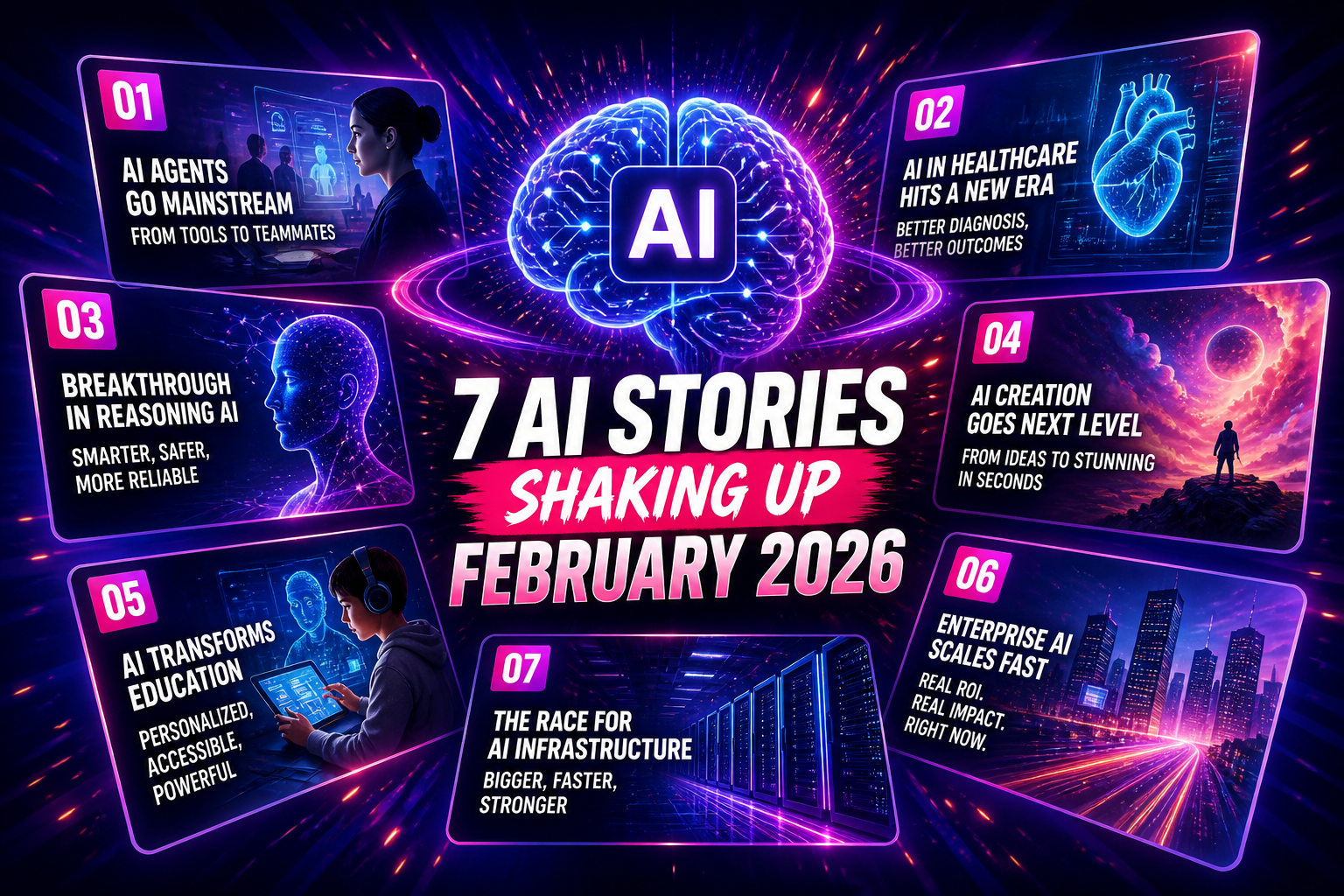
If you blinked this month, you missed a lot. February 2026 might go down as the month AI agents stopped being a buzzword and became the main event. From billion-dollar acquisition battles to a security crisis nobody saw coming, here are the 7 stories reshaping the AI landscape right now.
1. Meta and OpenAI Are Fighting Over the Same AI Agent
An open-source AI agent called OpenClaw exploded onto the scene in late January, racking up over 180,000 GitHub stars and millions of installs. Now both Mark Zuckerberg and Sam Altman want to buy it.
The creator, Vienna-based developer Peter Steinberger (who previously sold PSPDFKit for $100M+), says the project must remain open source. Zuckerberg reportedly reached out via WhatsApp and got into a 10-minute argument about Claude Code vs. Codex. Microsoft CEO Satya Nadella has also called.
No deal has been finalized, and Steinberger is currently losing $10-20K per month running the project. The man tried 43 ideas before this one clicked. Sometimes persistence really does pay off.
2. Meta Dropped $2 Billion on an AI Agent Platform
While chasing OpenClaw, Meta also quietly closed a $2 billion acquisition of Manus, a competing AI agent platform. Combined with their open-source AI strategy (Llama, PyTorch), Meta is making the most aggressive play in the agent space by far.
The message is clear: Meta believes autonomous AI agents are the next computing platform, and they’re buying their way to the front of the line.
3. Claude Code Hit $1 Billion in Revenue (in 9 Months)
Anthropic’s coding assistant Claude Code reached $1 billion in annualized revenue by November 2025 — roughly nine months after its February 2025 launch. Then they shipped version 2.1.0 with 1,096 commits in a single release.
The headline feature? Agent Teams — multiple AI agents working in parallel on different parts of your codebase. Developers report that AI now writes roughly 80% of their initial implementations, shifting their role from writer to reviewer.
That’s not a tool. That’s a coworker.
4. Apple Put AI Agents Inside Xcode
In a move that surprised the developer community, Apple announced Xcode 26.3 with native Claude Agent support built directly into the IDE. This is the first time Apple has integrated a third-party AI agent into its developer tools.
Why this matters: when Apple builds agentic AI into its flagship dev tool, it signals that AI-assisted coding isn’t an experiment anymore. It’s the default. If you’re building iOS or macOS apps without AI assistance in 2026, you’re bringing a knife to a gunfight.
5. GPT-5 Is Quietly Powering Everything
While the headlines focus on agents and acquisitions, GPT-5 is now live and running under the hood of platforms like OpenClaw. The model supports the multi-model approach that’s becoming standard — agents that can switch between Claude, GPT-5, Grok, and Llama depending on the task.
OpenAI’s Codex continues to compete head-to-head with Claude Code, and the “AI coding wars” are heating up with Cursor, Windsurf, and now Apple all fighting for developer mindshare.
6. 42,900 AI Agents Were Left Wide Open to Hackers
Here’s the story that should scare you. Security researchers discovered that 42,900+ AI agents were exposed due to misconfigurations, with 15,200 found vulnerable to direct exploitation.
Think about what an AI agent typically has access to: your email, your files, your calendar, your passwords. When one of those agents gets compromised, it’s not a data breach — it’s handing someone the keys to your entire digital life.
The worst part? No major regulatory framework addresses autonomous AI agent security. We’re building the plane while flying it, and nobody’s checking if the wings are attached.
7. The Trillion-Dollar Number Everyone’s Quoting
McKinsey now projects that AI agent applications will generate $2-4 trillion in annual value. Analysts predict that agentic AI could automate 50% of knowledge work by 2028. These aren’t fringe predictions — they’re coming from the same firms that Fortune 500 CEOs use to plan their next decade.
The shift from “AI as a tool you use” to “AI as an autonomous worker you manage” is happening faster than anyone expected. Individual developers are becoming small teams. Small teams are becoming departments. And the companies that figure out the agent stack first will have a structural advantage that’s nearly impossible to catch.
What to Watch Next
The rest of February still has a lot of runway. Keep your eyes on:
- The OpenClaw deal — who wins Steinberger’s signature (if anyone)?
- EU AI Act enforcement — new rules are coming for agent developers
- Google’s response — Gemini has been unusually quiet while competitors grab headlines
- AI agent security standards — will the industry self-regulate before governments force it?
One thing’s certain: the age of AI agents is here, and February 2026 will be remembered as the month it went mainstream.
Sources: CNBC, Apple Newsroom, Trending Topics, OfficeChai, Medium
Share this article
Leave a Reply